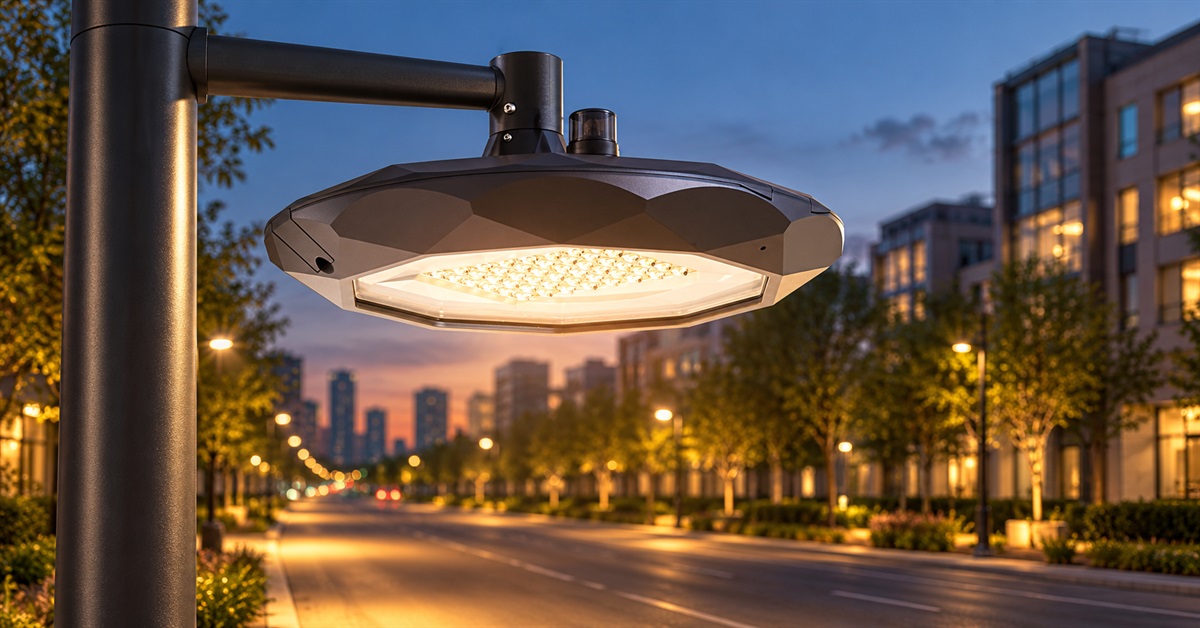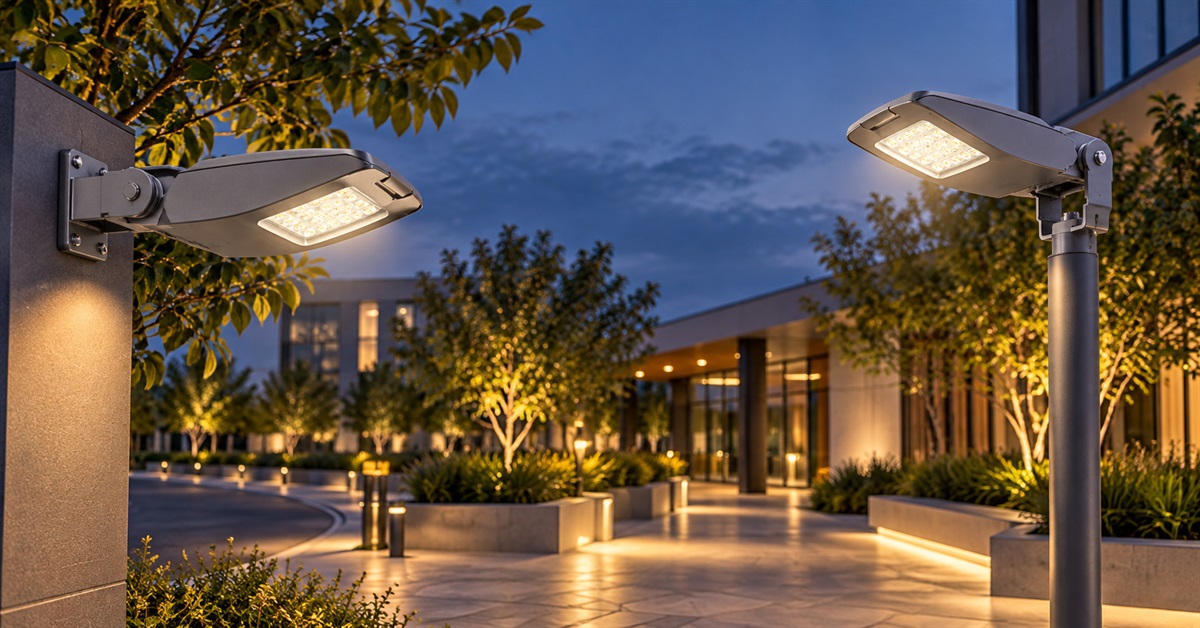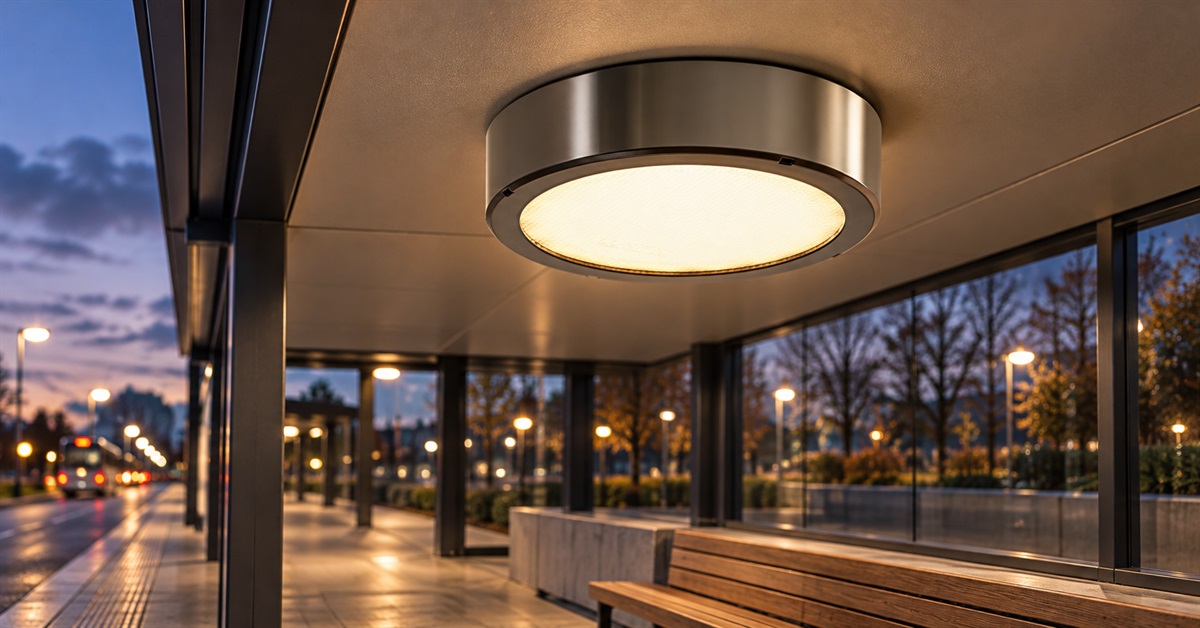
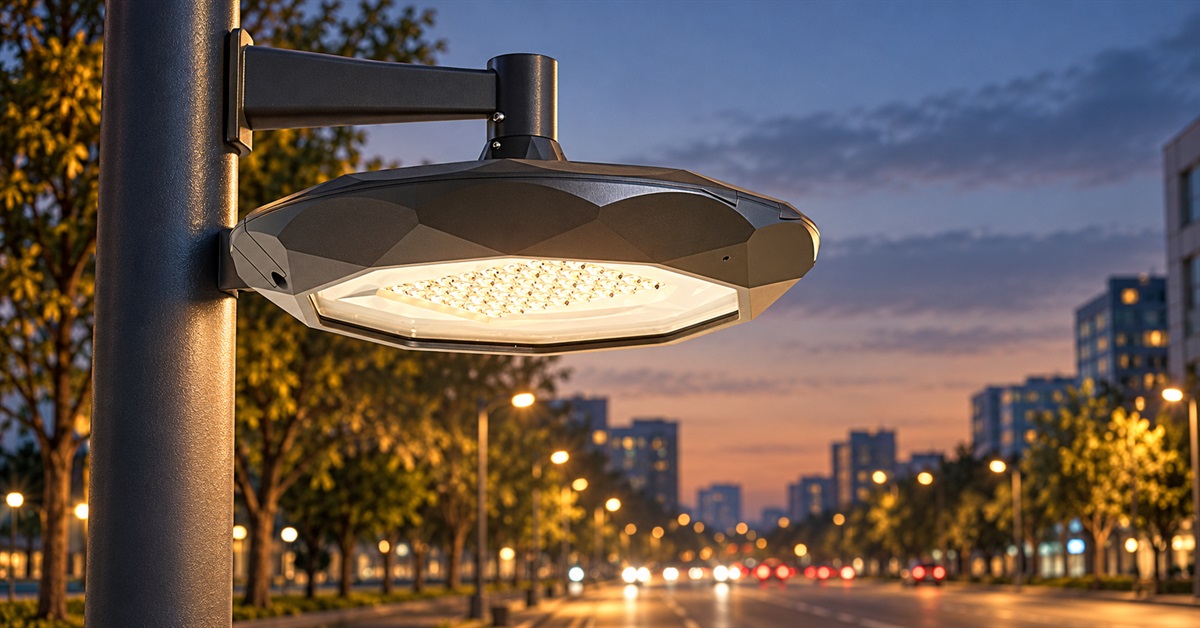
A coordinated lighting scheme does not require every luminaire to be mounted in the same way. A street, a small square and a connecting footpath can share a product family while using different installation forms. With Mantis outdoor lighting, the useful first question is not simply which head looks best. It is how that head connects to the actual site.
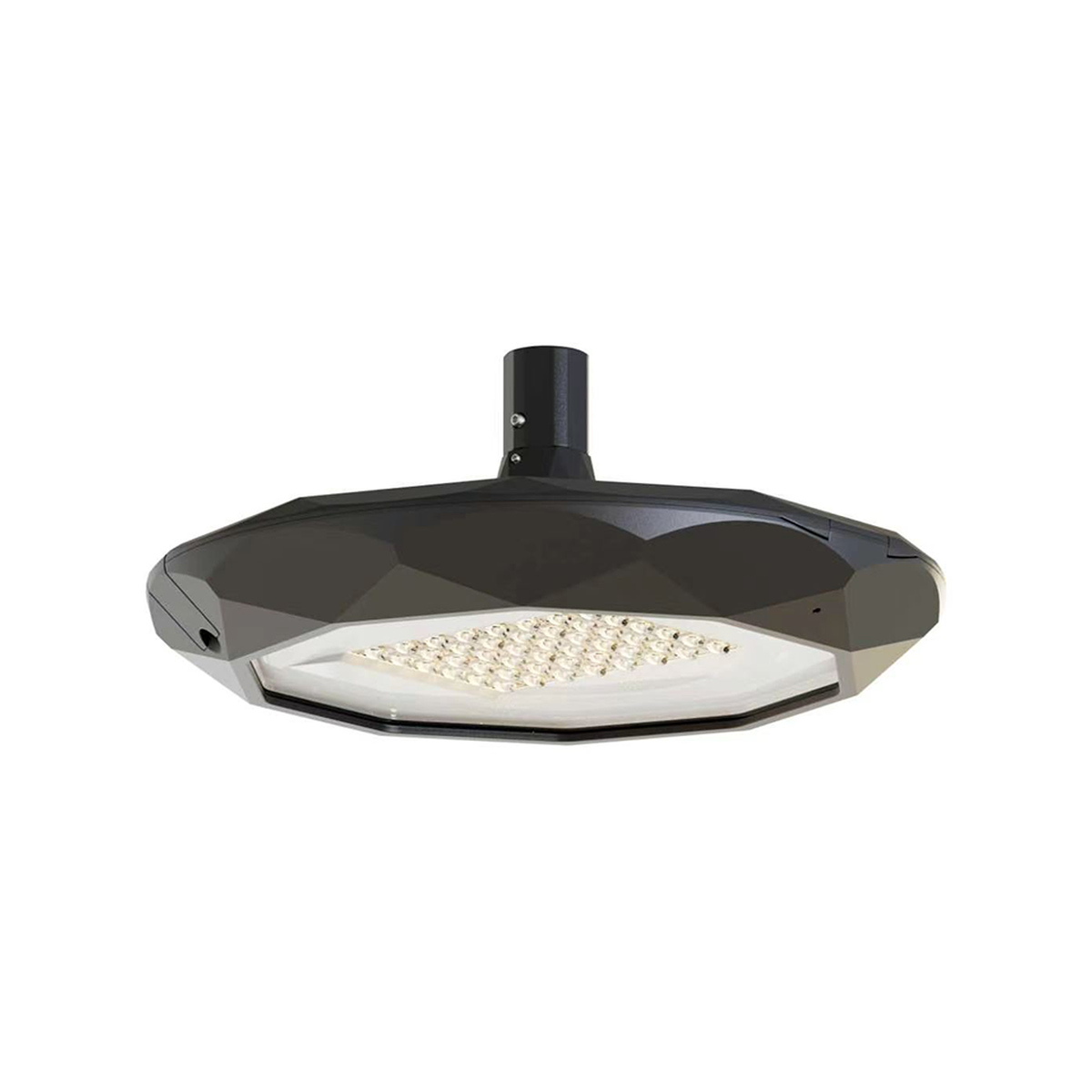
The LUXiFiC portfolio includes Mantis-H, Mantis-L, Mantis-S and Mantis-D. Their shared visual language creates a starting point for coordinated selection. Their mounting arrangements still need separate review: a suspended head, a projecting road connection, a side-mounted configuration and a post-top structure are not interchangeable installation details.
Begin with the supporting structure
Mantis-H is the suspended reference. Consider it where the design already provides a suitable hanging support, then request the exact suspension connection and installation drawing. The attractive simplicity of a suspended head should not hide questions about cable routing, access above the luminaire or the responsibility for the supporting structure.
Mantis-L provides the conventional road-lighting mounting route. Mantis-S offers a side-mounted alternative, while Mantis-D introduces the post-top form. Compare these against the existing pole, proposed bracket and intended head orientation. A product photograph can identify the form; it cannot establish that a socket fits an existing pole or that a bracket has the required structural capacity.
Coordinate appearance without copying the optical specification
Imagine a project with a residential street, a pedestrian connection and a small gathering area. A consistent Mantis family appearance may support the architectural brief, but the light distribution should follow each task. The street needs a calculation based on its geometry. The footpath needs attention to its edges and nearby windows. The gathering area needs a review of the places people approach, sit and cross.
The Mantis reference lists Type I-V or custom optical arrangements. Treat that as a configuration menu, not evidence that one supplied optic suits every location. Request the photometric file for the exact proposed version and test the intended mounting height, orientation and spacing together. Changing the bracket or tilt after a calculation can also change the result.
Read the enclosure and controls as separate decisions
The available Mantis technical reference lists die-cast aluminum and glass construction, IP66 and IK09. Those are useful specification inputs, but they do not replace a complete environmental review. Exposure, finish, fixings and cable entries still belong in the discussion. An ingress-protection rating alone is not evidence of corrosion resistance at a coastal site.
DALI, 0-10V, Astro Dim and Step Dim appear in the control reference. Select the required control approach before asking for a final quotation. Confirm the driver, wiring and any accessory interface for the chosen model. A family-level option list does not mean all controls are fitted together or supplied as standard.
A practical Mantis selection schedule
- Location: name the street, path or public-space zone and describe its actual use.
- Mounting: record the Mantis model, pole or support connection, orientation and installation height.
- Optics: attach the exact photometric file used in the lighting calculation.
- Electrical configuration: confirm supply, driver, dimming method and accessory requirements.
- Maintenance: identify how the head is reached, isolated and serviced without assuming all mounting forms use the same procedure.
Questions worth resolving before ordering
Can one Mantis model be substituted for another?
Only after checking the complete configuration. A similar light-engine appearance does not confirm identical mounting dimensions, weight, optics or service access. Treat a change of mounting form as a specification change and request updated drawings and calculations where relevant.
What should accompany an enquiry?
Send a marked site plan, the proposed mounting arrangement, installation height, quantities and control requirements. Existing-pole projects should include measured connection details and photographs. Ask for a model-specific drawing, optical file and commercial configuration rather than a general family brochure alone.
Mantis outdoor lighting is most useful as a coordinated family when its shared appearance is paired with location-specific engineering. Explore the Mantis references in the LUXiFiC product portfolio, then submit the installation brief to request the technical pack for the selected forms.