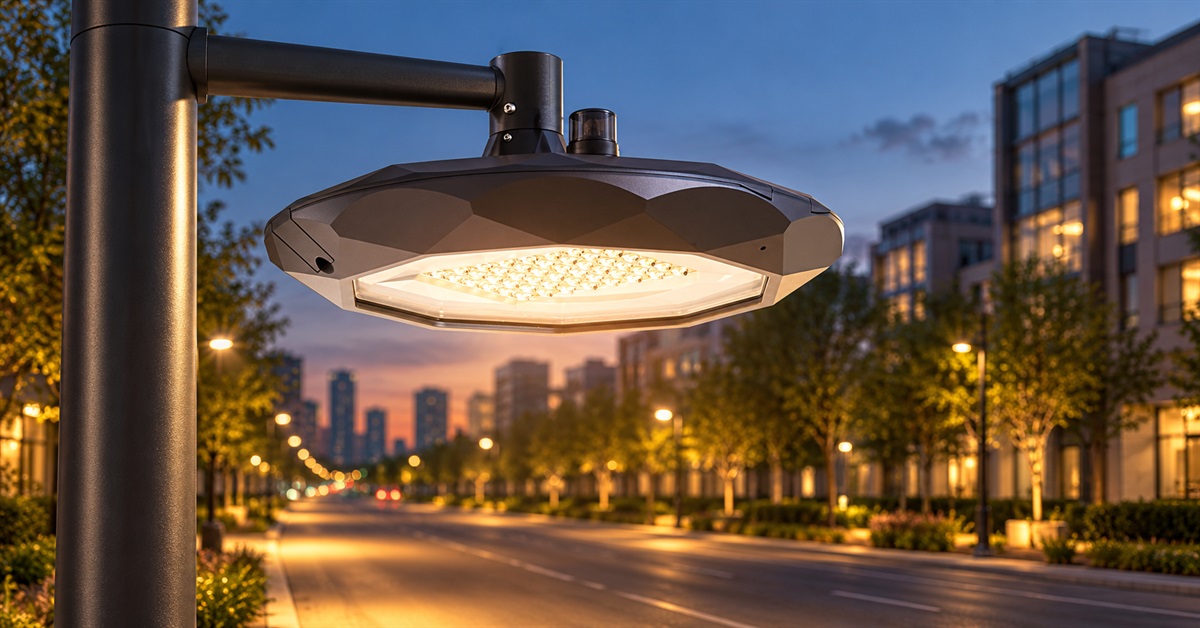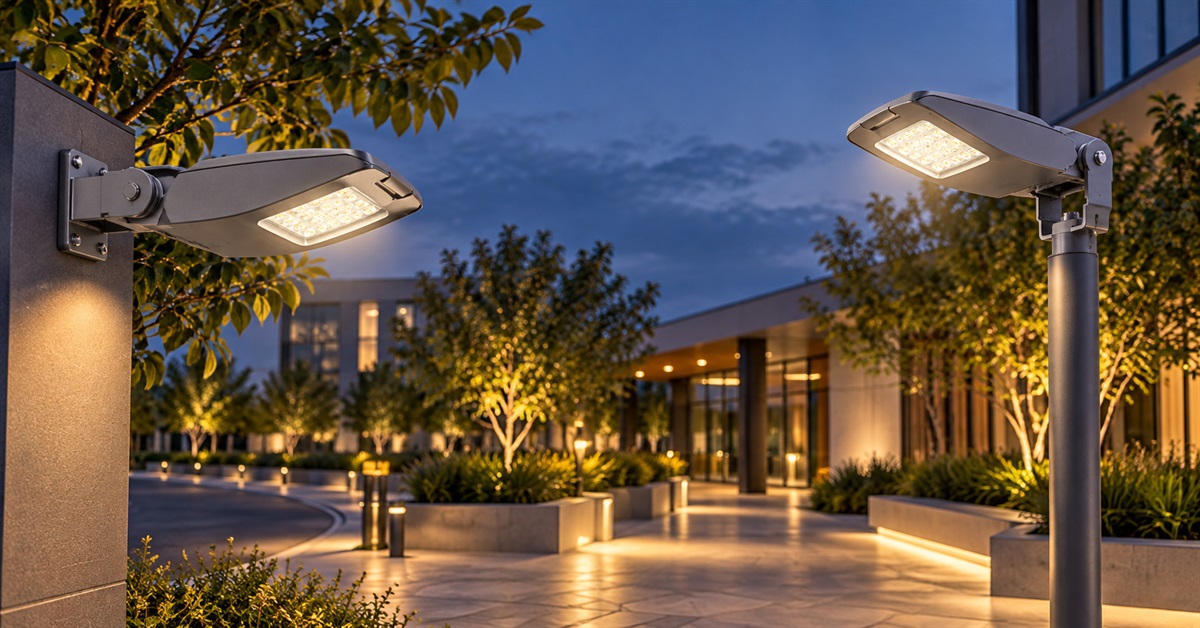
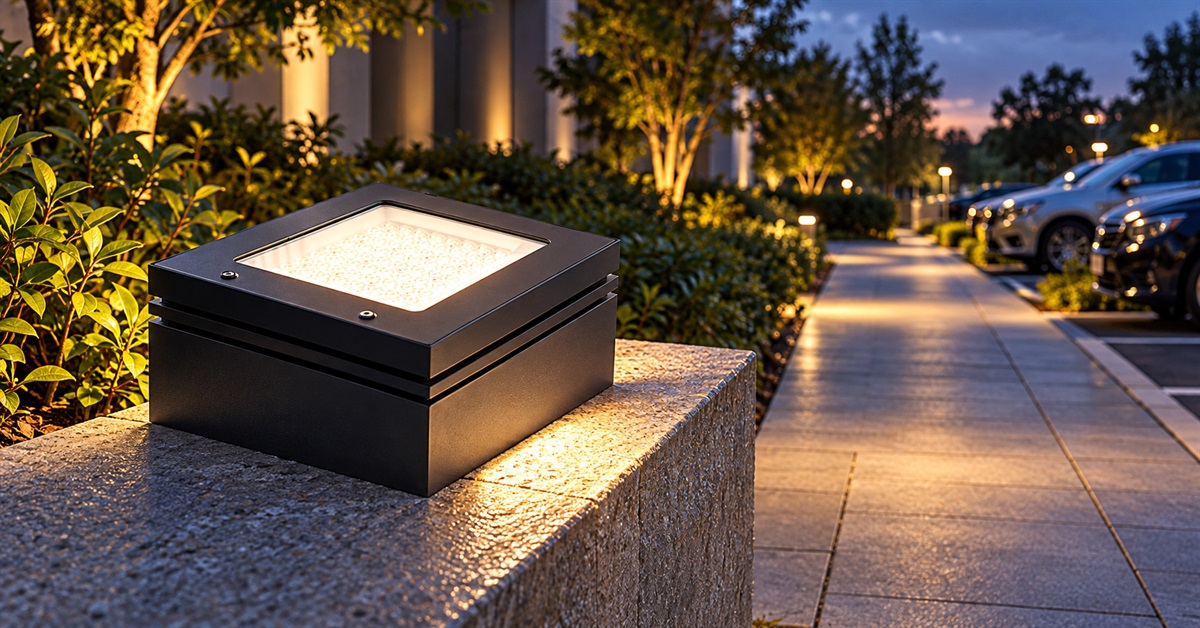
A car park is more than an arrangement of parking bays. It includes vehicle aisles, pedestrian routes, entrances, crossings and boundaries shared with other properties. A restrained rectangular luminaire can suit the architectural setting, but its appearance alone does not establish a successful layout. A BoxLED car park lighting enquiry should define each part of the site before a model is selected.
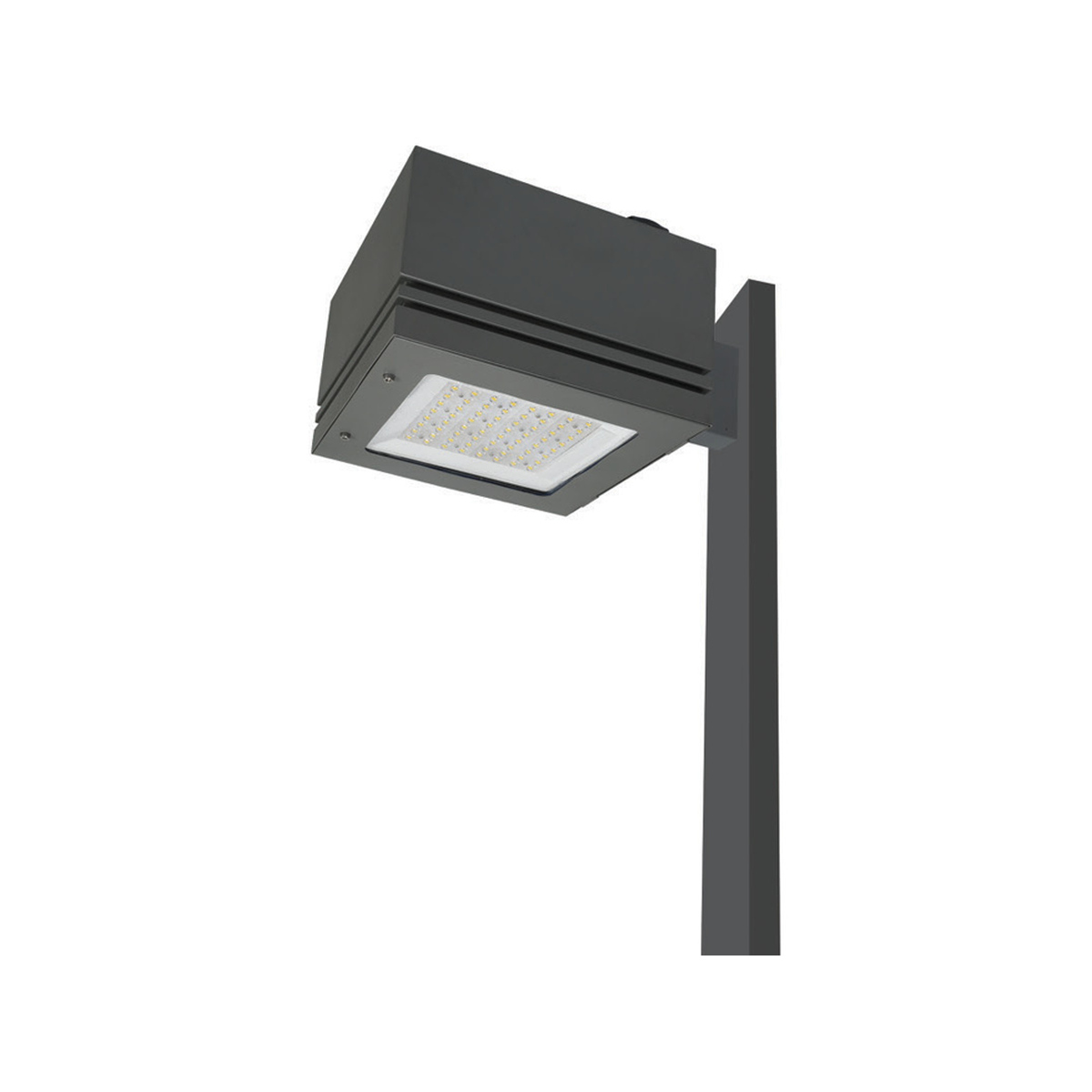
The LUXiFiC portfolio includes BoxLED-152 and BoxLED-298. They offer related product references for functional outdoor spaces. Compare their actual forms and installation details, then ask for the technical information for each proposed version. The existence of a larger-looking head is not proof of a particular output or coverage area.
Separate vehicle lighting from pedestrian connections
Mark the main driving aisles, bay groups and turning points on the plan. Then add the walking route from parked vehicles to the building entrance. Identify crossings, steps and other transitions. The lighting designer needs to know which areas are assessed together and which need separate treatment.
Include adjoining roads, neighboring windows and other sensitive edges. A broad distribution that reaches several bays may also send light beyond the intended boundary. Review the proposed optical file at the actual pole position, height and orientation rather than estimating coverage from the shape of the housing.
Use the documented BoxLED-152 data carefully
The available BoxLED-152 model sheet lists stainless steel 201 and glass construction. It identifies IP66, Type I-V or custom optical arrangements, and several LED and power configurations: 20-50 W, 50-90 W, 40-100 W and 80-150 W. These overlapping bands reflect different configurations; they should not be combined into an assumed continuous performance range.
Request the exact configuration proposed in the quotation. Ask which optic, LED arrangement, driver and operating setting support the supplied photometric file. Also confirm whether the listed control and accessory options are included or separately specified.
Keep BoxLED-298 confirmation separate
BoxLED-298 is a useful alternative to include in a model comparison, particularly when reviewing the actual mounting form and product proportions. However, BoxLED-152 data should not be transferred to BoxLED-298 without a matching technical document. Ask for the selected BoxLED-298 drawing, power configuration, materials and optical information directly.
This distinction improves procurement clarity. Two rows in a comparison schedule should identify two complete configurations, not one verified specification and a second row filled by assumption. If a value has not been confirmed, mark it as a supplier question until the corresponding document is available.
Do not ask an IP rating to answer every environmental question
IEC 60529 addresses protection provided by enclosures, including ingress of solids and water. An IP entry is therefore relevant to enclosure selection, but it is not a complete statement of corrosion resistance, coating durability or the suitability of every fixing and cable entry.
For a site exposed to salt, cleaning chemicals or other demanding conditions, describe that exposure in the enquiry. Confirm the material, finish and installation details for the selected configuration. Keep enclosure ingress and mechanical-impact information as separate specification entries, and request the applicable supporting evidence where the project requires it.
Compare complete installed solutions
- Geometry: pole locations, height, mounting orientation and any fixed existing supports.
- Optical selection: exact distribution and photometric reference used for the layout.
- Environmental selection: confirmed body material, finish, ingress and impact information.
- Operation: agreed dimming or switching approach and any accessory interfaces.
- Maintenance: access method, replacement components and configuration identification.
Should a pathway use the same configuration as the parking bays?
Not automatically. The mounting constraints, boundaries and lighting task can differ. A related product form can maintain visual coordination while the optical and electrical selection is developed separately.
Send LUXiFiC a marked car park plan with its pedestrian connections and environmental conditions. A BoxLED car park lighting shortlist can then be based on confirmed configurations and a meaningful installation comparison.