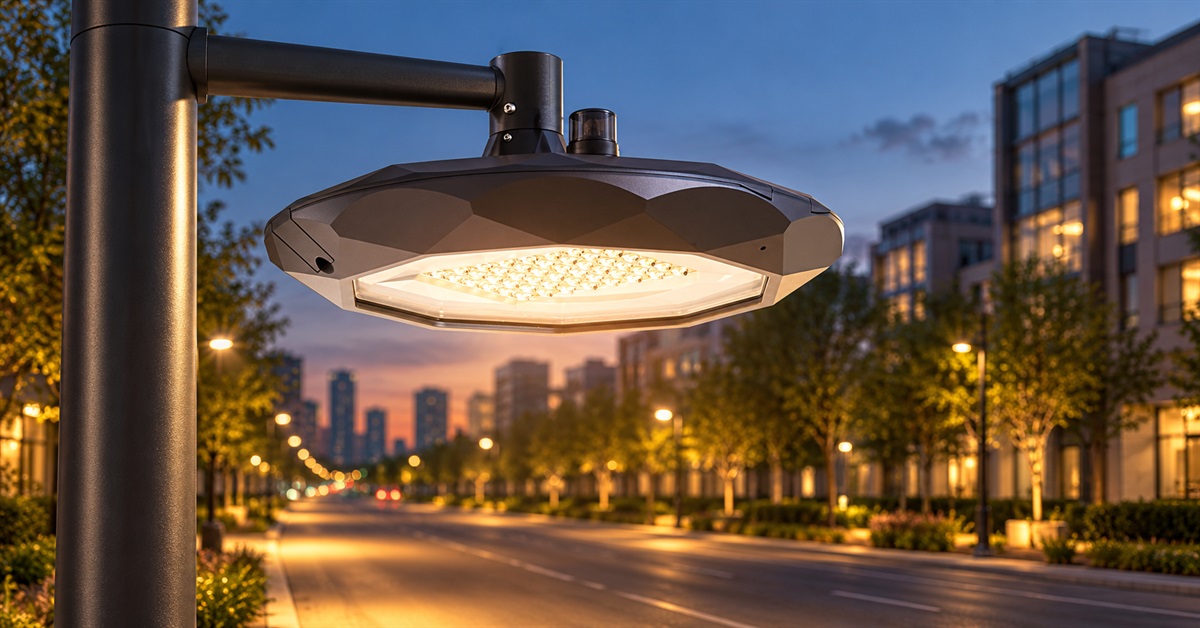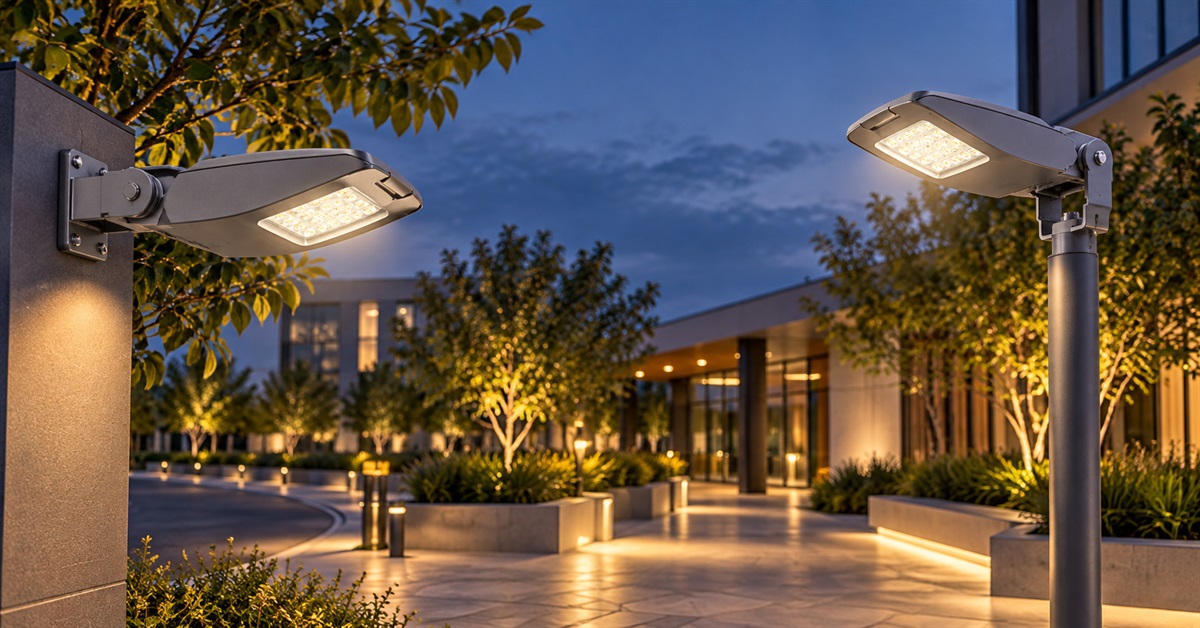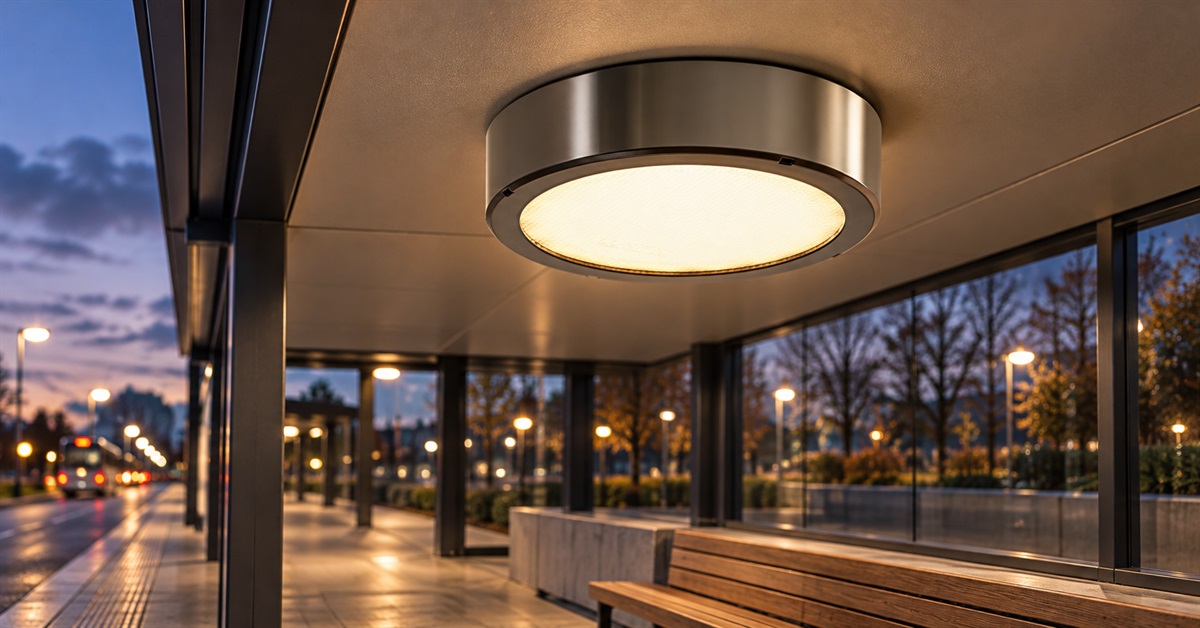
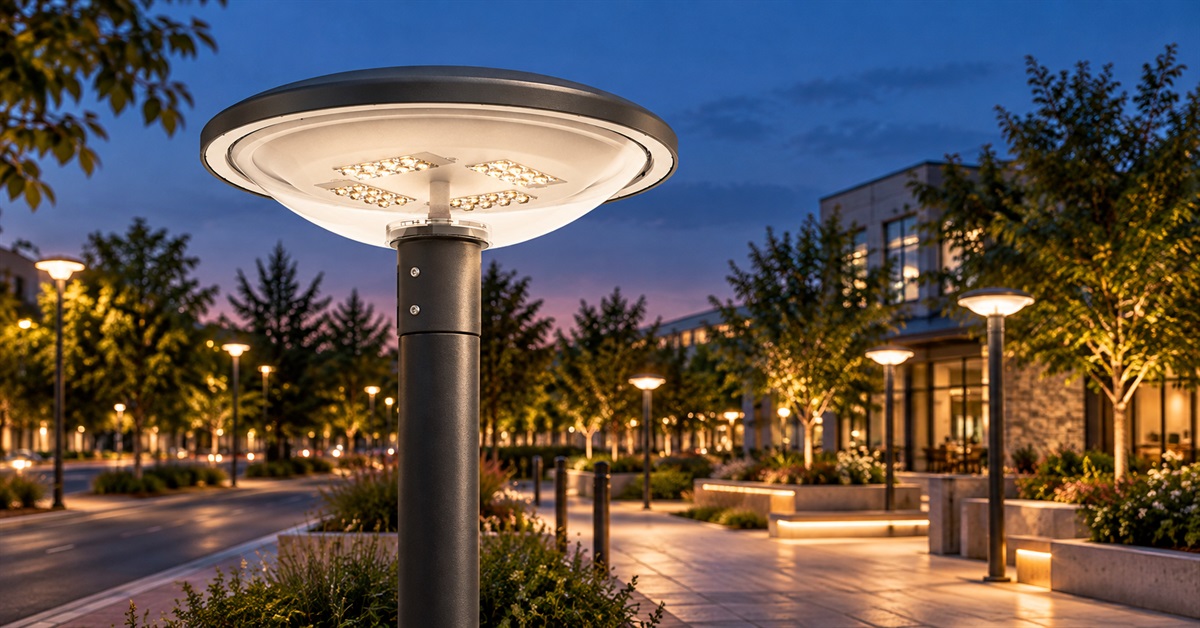
A public-realm project is usually a sequence of spaces, not a single lighting task. People move from a residential street to a connecting path, then into a square or landscaped gathering area. The lighting should respond to those changes without making the overall scheme feel fragmented. The 512 family lighting portfolio provides several mounting routes around a shared circular product form.
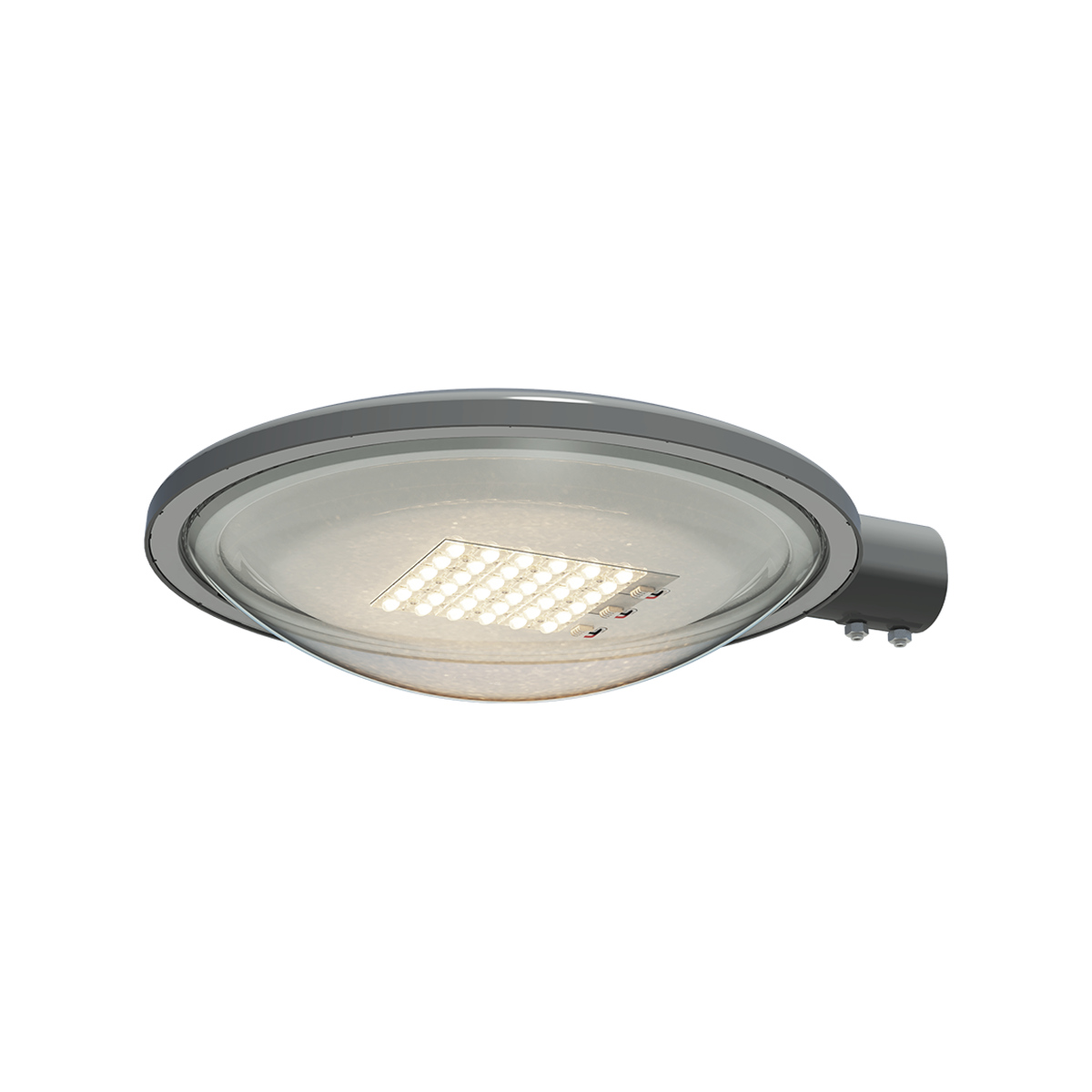
The three references to compare are 512-L, 512-HS and 512 Post Top. Their relationship is useful for architectural coordination, but each still needs its own installation review. Consistency should come from an agreed family strategy, not from assuming the same mounting detail or optical arrangement works everywhere.
Match each mounting form to a real location
512-L is the conventional road-lighting mounting reference. Start with the street or edge condition, the intended pole connection and the required head orientation. If the scheme uses existing supports, request the exact connection dimensions rather than assuming a new head will fit.
512-HS is the suspended configuration. It offers a different relationship between the head and its supporting structure. Specify the actual suspension interface and cable route, and identify how the installation will be reached for maintenance. A suspended solution should be selected around a suitable support, not added to a drawing as an unexplained hanging symbol.
512 Post Top places the circular head in a top-pole arrangement. It is a useful reference for squares, pedestrian areas and landscaped spaces where the pole and head are read together. Confirm the pole-top connection and overall installation proportions using drawings for the selected model.
Use a shared visual language, not a shared calculation
The same luminaire family can serve different spaces with different configurations. A path alongside homes calls for careful treatment of its boundaries. A square requires attention to movement routes and gathering points. A street introduces a different geometry again. Treat those as separate lighting zones, even when the heads look related.
Request the selected optic's photometric file for each zone and record the mounting height, spacing and orientation used in the calculation. An attractive daytime elevation is only one part of the review. The night-time distribution needs to be considered against the actual site and the project's agreed criteria.
Bring maintenance into the family decision
The 512 design notes describe a die-cast aluminum disc body and separable LED modules. This service-oriented concept is worth discussing early. Ask which components are replaceable on the selected version, how they are accessed and what replacement references should appear in the maintenance schedule.
Shared product appearance does not prove that every component is interchangeable between mounting variants. Confirm module and driver compatibility explicitly. Ask how seals, fixings and connectors are handled during service, and whether the planned access equipment works at all three installation forms.
Turn the concept into a configuration schedule
The family reference lists IP66 and IK09, along with configuration-dependent optical, color-temperature and control options. Use those entries to start the specification conversation, then obtain confirmation for the actual product version. Do not transfer one model's power or dimensions to the other mounting forms simply because they belong to the same family.
- Street zone: 512-L, with the exact pole or bracket interface and street-specific optical selection.
- Suspended zone: 512-HS, with the supporting structure, connection and maintenance access identified.
- Square or landscape zone: 512 Post Top, with the pole-top detail and layout reviewed together.
- Shared selections: agreed finish and visual intent, plus confirmed control requirements for each zone.
- Document control: model-specific drawings, photometric references and a clearly identified spare-parts schedule.
Must all three zones use the same color temperature?
That is a project-design decision. Agree the intended night-time character and any site-specific requirements before confirming the available configurations. Do not let an unreviewed substitution create a visible mismatch between adjacent spaces.
A well-developed 512 family lighting scheme connects the public realm through a recognizable form while letting each location have its own installation and optical solution. Send LUXiFiC a zone-marked site plan to request a focused comparison of 512-L, 512-HS and 512 Post Top.